
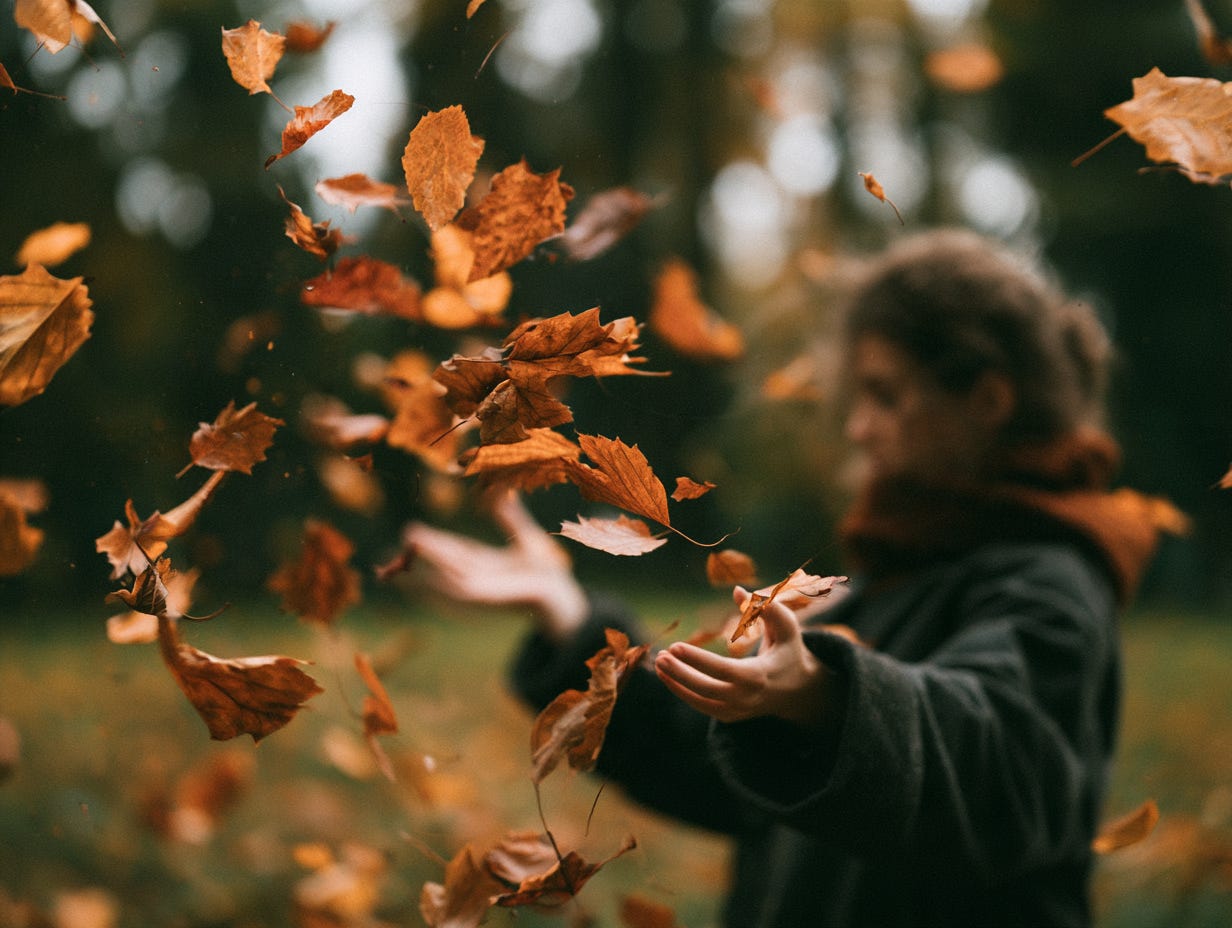
Scorpio season has begun, and here in the Northern Hemisphere, there’s a shift in the air as the light begins to fade; can you feel it? The leaves are falling, the colours are changing, and there’s a chill that feels almost eerie, yet calm.
For thousands of years, people all over the world have experienced this time as a threshold: when the veil between the living and the dead, the seen and the unseen, grows thinner. Across cultures, people have honoured this time in different but strikingly similar ways, creating sacred rituals and reconnecting with loved ones who have passed.
So this week, we’ll explore what Scorpio season has to offer and how the world celebrates this sacred time.
Scorpio: the alchemist of the zodiac
Scorpio is a fixed water sign and linked to the 8th house: the realm of endings, intimacy, shared resources, the subconscious, and everything hidden beneath the surface. Traditionally ruled by Mars, and in modern astrology, by Pluto, Scorpio is influenced by the energy of passion, sex, and action, as well as death, rebirth, and transformation. Pluto gets its name from the Roman god of the underworld, known to the Greeks as Hades, ruler of the dead.
This year, Venus — the planet of love, values and beauty — has also been retrograde through Scorpio, turning our hearts back toward the past for review. It’s a tender time to remember those we’ve loved and lost.
And not every loss comes through death. Some people leave our lives as we grow and change: friendships that faded, relationships that ended, versions of ourselves we’ve outgrown. They deserve to be honoured too, with gratitude for what they gave us, and the grace to let them go.
Scorpio energy asks us to go deep, to feel fully, and to face head-on what we usually avoid so that we can heal on all levels and rise into what is true for us. Secrets surface from the depths, transformation sheds old skin, and we get closer to our hidden subconscious patterns.
At a time of endings and rebirth, it’s no coincidence that so many cultures honour death and their ancestors during this season. The energy of Scorpio and the thinning of the veil go hand in hand.
Samhain: the Celtic new year
Samhain (pronounced SOW-in) is an ancient Gaelic festival celebrated from sunset on October 31st to November 1st. It marks the end of the harvest and the beginning of the dark half of the year.
It was believed that the veil between worlds was thinnest at Samhain, and that spirits and ancestors could come through more easily. Communities lit great bonfires, set out food for visiting souls, and sometimes wore disguises so malevolent wandering spirits wouldn’t recognize them.
Today, many people who follow pagan and earth-based paths still honour Samhain as a time to remember their ancestors, reflect on the year, and release what’s ready to die away.
Halloween, All Saints and All Souls
When Christianity spread through Celtic lands, the church placed All Saints’ Day on November 1st and All Souls’ Day on November 2nd, days to honour the saints and pray for loved ones who had died. The night before became All Hallows’ Eve, which slowly turned into “Halloween.”
Halloween comes from the word “hallow”, from the Old English word hālig, meaning “holy”. So, “to hallow” meant to make holy. The word also shares its roots with “whole” and “heal”. Maybe that’s what this season is all about: healing on deeper levels and feeling whole with the ones we’ve lost, because we’re never truly apart.
Our modern, playful traditions are deeply tethered to this spiritual history. Long before children yelled “trick or treat” for mini-sized chocolate bars, people in medieval Britain and Ireland practiced something called “souling.” On All Souls’ Day, the less fortunate and the young would go door-to-door, offering to sing songs and pray for the homeowner’s deceased relatives. In return, they were given “soul cakes” — small, sweet, spiced cakes often marked with a cross.
In Scotland and Ireland, this evolved into “guising,” where children wore elaborate masks to mimic the wandering spirits of Samhain, performing a poem, dance, or trick before receiving fruit, nuts, or coins.
Beneath the candy, costumes, and trick-or-treating, Halloween still holds that ancient whisper: the dead are close tonight. We are still wearing the masks of the ancestors, still sharing treats in the dark, and still keeping the spirits company.
Día de los Muertos: a celebration of love
In Mexico, the Day of the Dead is celebrated on November 1st and 2nd. It blends Indigenous traditions, including Aztec rituals honouring the dead, with the Catholic days of All Saints and All Souls.
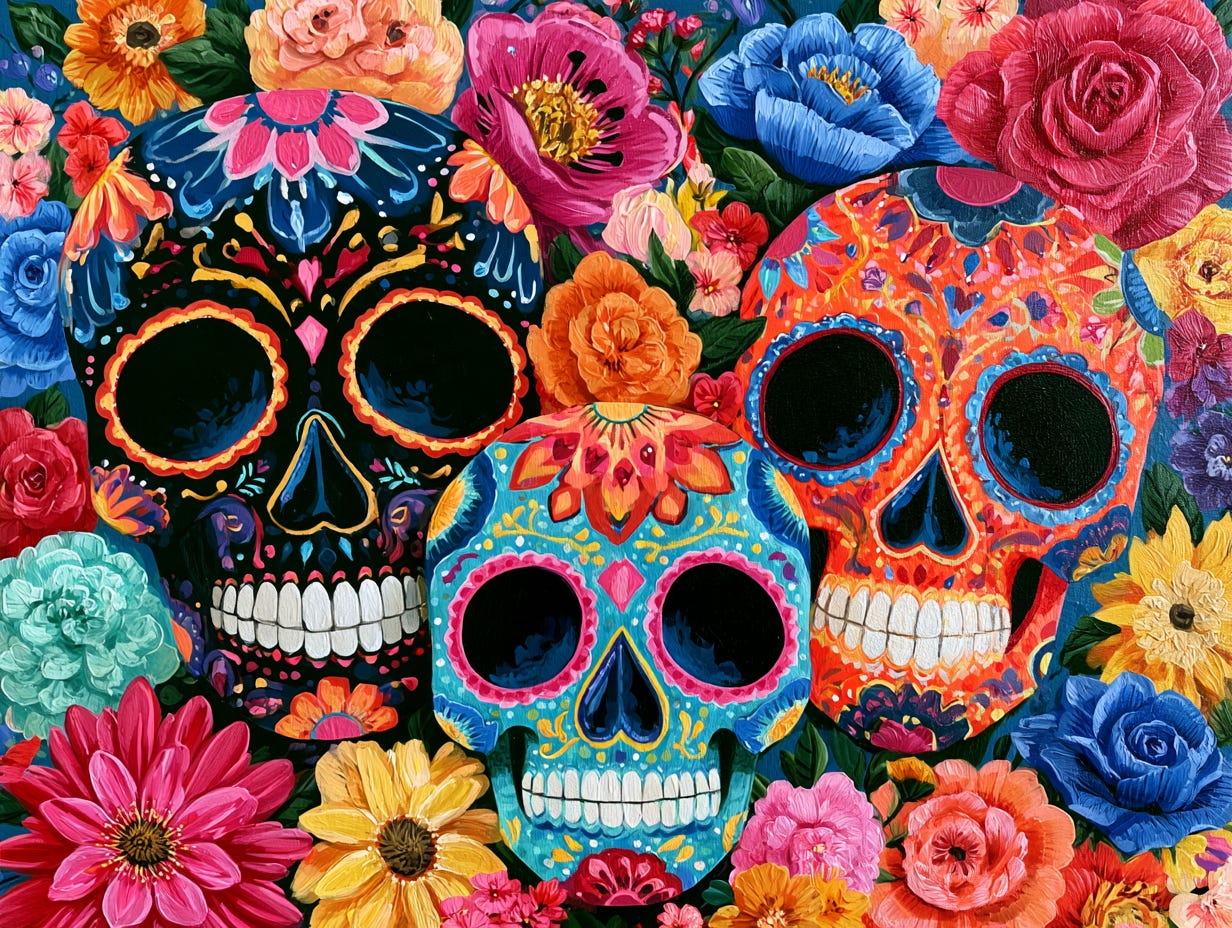
Rather than fearing death, Día de los Muertos embraces the thinning veil to welcome loved ones home. Families build ofrendas, altars covered in photos, candles, favourite foods and drinks of those who’ve passed on. Bright orange marigolds (cempasúchil) line the paths, their colour and scent believed to guide souls back to the ones they left behind. There are sugar skulls, pan de muerto (a sweet bread), music, and long nights spent in cemeteries with family, cleaning and decorating graves.
It’s joyful, colourful, and deeply tender. Death isn’t the end of a relationship. It is simply a transformation in how we stay connected to our loved ones.
The common thread
From candlelit cemeteries in Poland and the Philippines to lanterns floating on the water in Japan, honouring the dead is one of the most universal things humans do. What moves me the most is how much these traditions share. Light in the darkness. Food set out for those we’ve lost. Gathering together. Remembering out loud.
They remind us that grief and love are woven together, and that endings are a natural part of every cycle. The trees aren’t sad to drop their leaves. They’re making room for new growth.
This season invites us to do the same: to honour what has passed, and gently let go of what we no longer need to carry, so that we may bloom again.
This year, I’ll be sitting in quiet meditation to connect with my loved ones who have passed, and asking them, through the cards, what I’m ready to release this season in order to welcome something new.
A simple ritual for this season
If you’d like to do the same, here’s a simple ritual…
Create a small altar. Light a candle and place a photo or keepsake of someone you love who has passed. Add a flower, a favourite food, or something that reminds you of them. Speak their name out loud, and share a memory.
Then, a tarot spread for release. Pull one card for each question:
What am I ready to let go of?
What lesson is this ending teaching me?
What wisdom do my ancestors want me to remember?
What is ready to be born in its place?
Journal what comes through. Then, if it feels right, write what you’re releasing on a piece of paper and safely burn it, or bury it in the earth.
Closing
This time is about more than candy, costumes, and getting scared. It’s about realizing how close we really are to the other side, and that there’s nothing to fear
However you move through this Scorpio season — building an ofrenda, carving pumpkins, releasing patterns, or simply sitting quietly with your memories — I hope you feel held by all those who came before you.
With love,